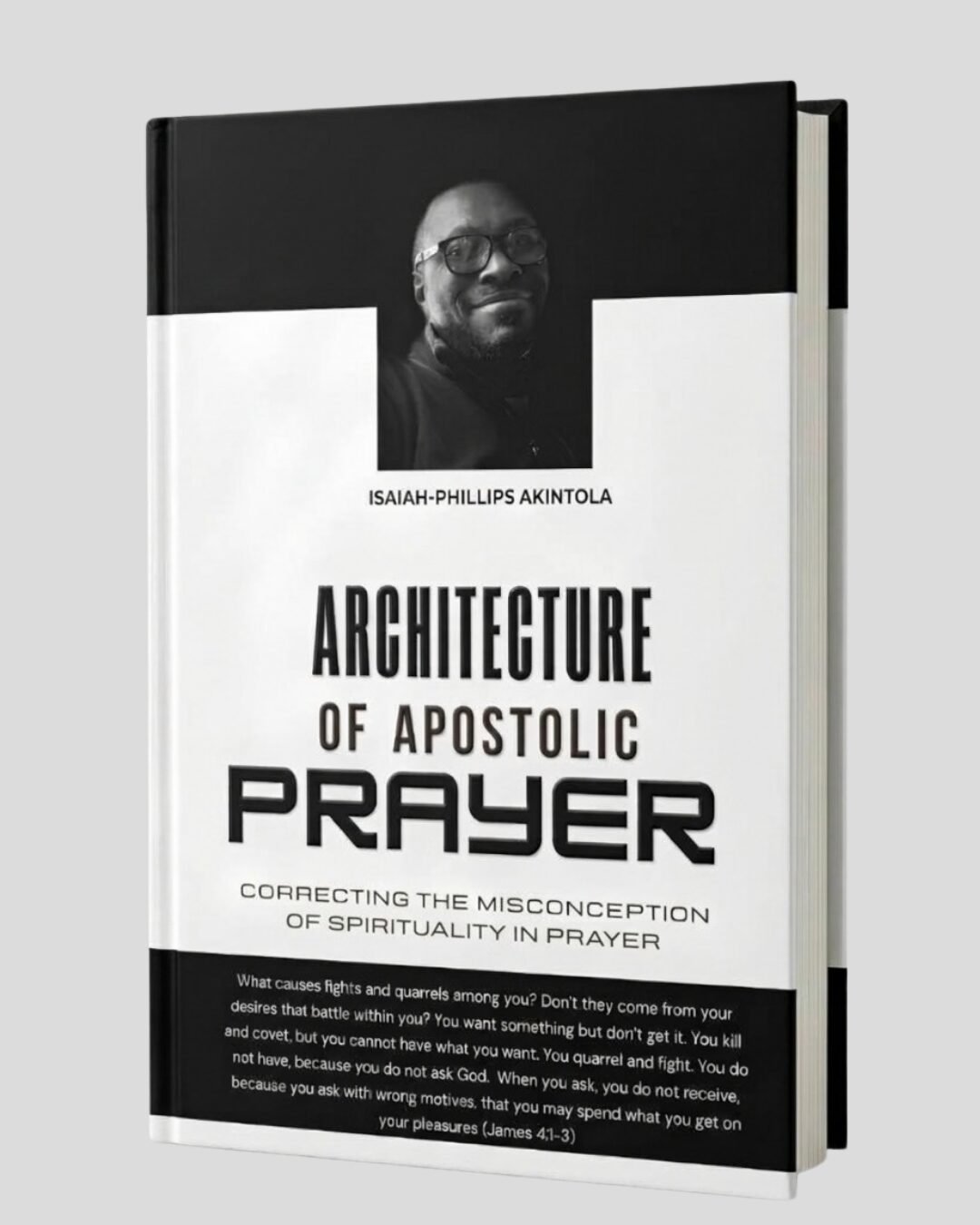
ARCHITECTURE OF APOSTOLIC PRAYER
Correcting the Misconception of Spirituality in Prayer
“Now David had brought up the ark of God from Kiriath Jearim to the place he had prepared for it, because he had pitched a tent for it in Jerusalem. But the bronze altar that Bezalel son of Uri, the son of Hur, had made was in Gibeon in front of the tabernacle of the LORD; so Solomon and the assembly inquired of him there. Solomon went up to the bronze altar before the LORD in the Tent of Meeting and offered a thousand burnt offerings on it. That night God appeared to Solomon and said to him, Ask for whatever you want me to give you” (2 Chronicles 1:4 to 7).
A powerful lesson for us in this new day
Restoration in one dimension was never meant to be the finish line, and Solomon shows what it looks like to reach for the next one. His approach before the Lord displays fundamental principles at the heart of true leadership. Several lessons could be drawn from this account about the kind of men the Lord is looking for in this season, but one stands out clearly, tied directly to Solomon’s own grasp of what prayer meant. An effective prayer lifestyle has always been a capstone of any successful vision, and Solomon carried that spiritual knowledge into an entirely different realm.
Here was a young man freshly appointed king after the mighty David, who understood the burden of leading a nation like Israel only after watching his father wrestle with its most delicate matters of governance for years. Apprenticing under David, whose leadership is still studied today, was no small preparation, and David’s example remains a reference point for governance, warfare, and economic development. Solomon stood in those same shoes, tasked with leading one of history’s greatest nations, a people the Lord holds especially close to His heart, destined to serve as a priesthood to the rest of the world (Exodus 19:6), and Solomon had every tool of war, diplomacy, and economic strategy already at his disposal.
Yet he could see clearly where those tools alone would fall short. He understood that depending on his father’s strength or wisdom alone would spell disaster for the whole nation, even though nearly everything he needed to build the temple had already been provided, and he refused to lean on that provision alone for what lay ahead.
He knew that without God’s direct approval and involvement, the whole mission was bound to fail, and that human preparation, however thorough, could only ever be a temporary foundation. Scripture records him gathering the leadership of the nation and going up to Gibeon, offering a thousand burnt offerings, a sacrifice unlike anything else recorded of a king, specifically to seek the Lord’s own direction (2 Chronicles 1:2 to 6).
That single action reveals the actual condition of Solomon’s heart concerning what lay ahead. Recognizing the Lord’s direction and purpose for a people in leadership matters enormously, and Solomon made that journey to Gibeon early in his reign, to the bronze altar Bezalel built under Moses’ own command.
Discover more from PortalsGate
Subscribe to get the latest posts sent to your email.