NAVIGATING 2026 PART 2: THE PROPHETIC UNDERSTANDING THE NEW LEADERSHIP AND GLOBAL ECONOMIC LANDSCAPE.
The Significance of the Fourth Industrial Revolution
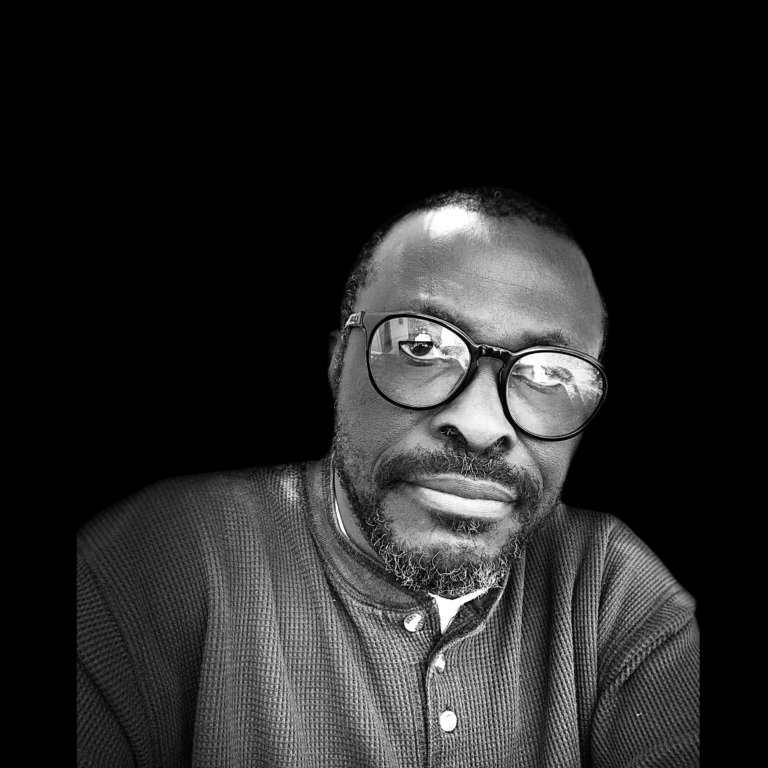
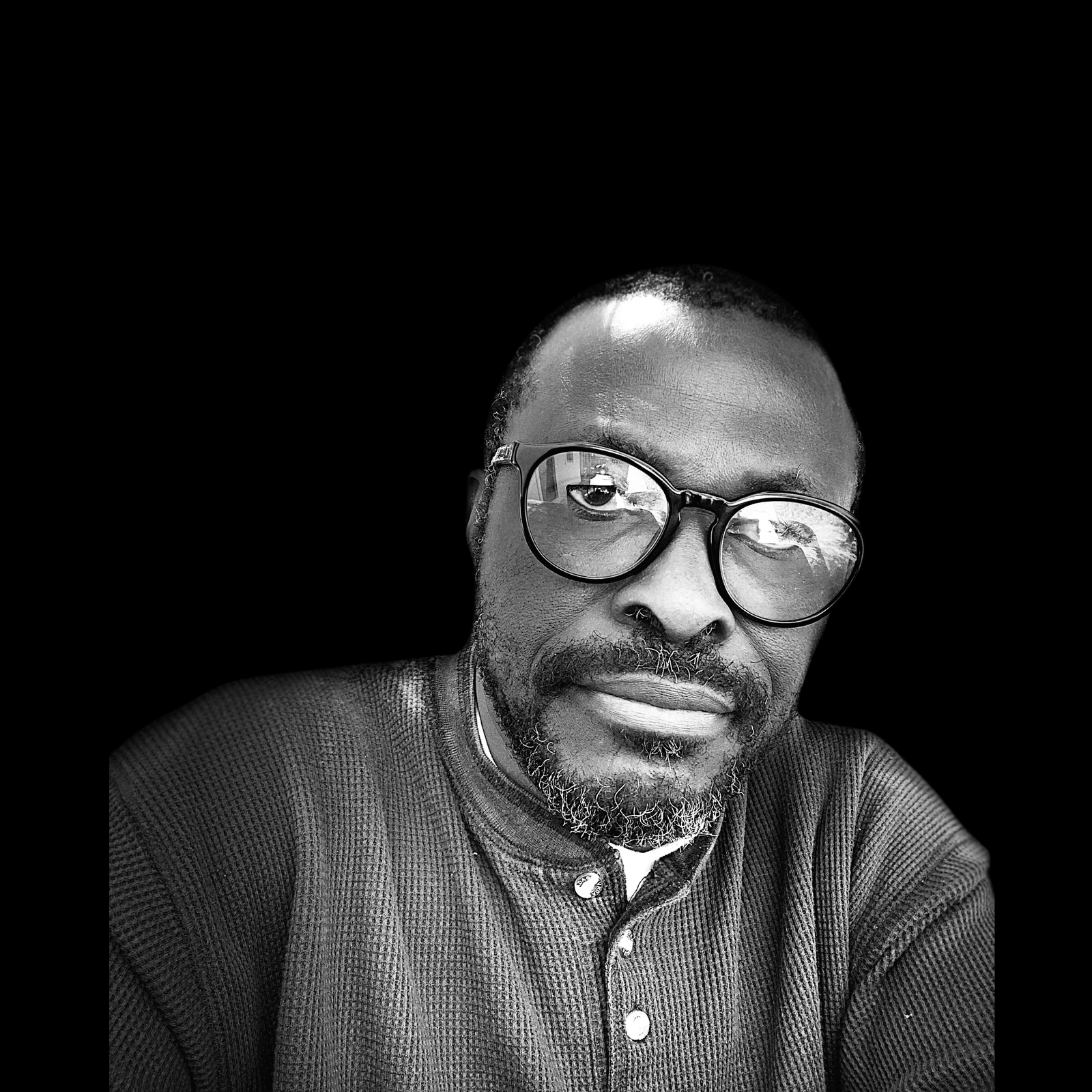
BY Isaiah-Phillips Akintola
We find ourselves at a defining juncture in human history, often described by economists and sociologists as the Fourth Industrial Revolution. Unlike the industrial revolutions that preceded it, this era is marked by profound differences in both technological advancements and evolving social norms. The scale and pace of change are unprecedented, manifesting simultaneously across multiple layers of society and sectors of the economy. Engaging successfully with the complexities of this economic era requires more than just intellectual or technical knowledge. It demands a comprehensive understanding that is guided by the wisdom and insight of the Spirit. For followers of Christ, our mandate extends beyond mere observation; we are called to discern and align with the redemptive purposes of heaven for our time. This means that our engagement with the world—be it social, economic, or personal—should be informed by prophetic insight and divine direction.
It is essential for believers to recognize that what is unfolding on the global stage, from America to Asia, or from Africa to Europe has a direct impact on our daily lives. The spiritual realities shaping this era carry significant economic implications, influencing how we live, work, and interact with the world around us. Therefore, it is not sufficient to remain passive or detached; instead, we must be equipped with a prophetic ensemble, enabling us to perform our roles as saints with accuracy and purpose.
There may be a tendency among some Christians to view global events as distant or unrelated to personal life. However, the interconnectedness of today’s world means that changes on the global scale inevitably influence every aspect of our existence.
To navigate these shifts effectively, it is critical to cultivate sound economic understanding, spiritual discernment, and intentional engagement with life. Only then can we respond accurately to the challenges and opportunities of this transformative season. The 2026 Davos economic gathering once again proves that the world has shifted from its former position and economic understanding. The present landscape highlights this very well. We are witnessing the interruption of established economic order. We are witnessing what is now seen as leadership and economic rupture at massive scale. The world leadership, particularly from the West, has reached the end of an era. An era that built and enriched their economic vision and strength. Yet the Lord is speaking to us with divine presence and wisdom. It is important to see things not just through a natural or political lens, but through what God sees and what His heart is upon the earth. We must understand the nature of the season we have been ushered into.
A Season Pregnant with Prophetic Realities
The nature of this season is one pregnant with profound prophetic realities. We are witnessing in real time nations like the EU and America, who have held power positions as allies, falling apart before our eyes. Students of history and prophetic tracking would certainly examine this moment with keen insight and observation. The nature of life as we know it has changed. It will continue to change. We must have perspective, one guarded and led by the Spirit, to navigate precisely as the Father has informed us.
As we said at the beginning of the year, 2026 is a year when we must develop competent, systematic understanding. This means the way we look at life has to change from our past religious conditioning and interpretation. We must have vantage prophetic insights needed for precise decision making. This will not only allow us to correctly pivot in this season to a spiritual position where we can see things from a higher vantage point like the prophet Habakkuk. It will also enable us to give those reading the vision we are receiving from the Lord the ability to run precisely with courage and faith particularly, as it relates to the marketplace.
The first industrial revolution was powered by steam and mechanization. The second was driven by electricity and mass production. The third emerged through computerization and digital technology.
Now, the fourth industrial revolution is characterized by the fusion of technologies that blur the lines between physical, digital, and biological spheres. It is powered by artificial intelligence, quantum computing, biotechnology, and interconnected systems operating at speeds and scales previously unimaginable. In this environment, the world no longer primarily rewards hard work in the traditional sense. The factory worker who puts in long hours of physical labor, while still valuable, does not receive the same economic reward as someone who creates a digital product that can scale globally with minimal additional effort. Instead, the world now rewards smart work. This operates through knowledge-based systems and economies.
This is not about working less. It is about working strategically with knowledge, information, and systems that create leverage and multiplication rather than simple addition. The only way anyone can successfully navigate this workplace with such demands is to live within the context of the life that releases divine light. Light is what the world is looking for. Yet this light is only found in the life of Christ. In him was Life and the life became the light of men. The life of God carries the creative ability that gives power to bring ideas and innovation to life. When you work in this divine creative life, the powers that be in Babylon will not be able to ignore or challenge your sense of creative productivity.
The Biblical Foundation for Knowledge-Based Systems
This concept should not be strange to any serious biblical student or scholar. According to the book of Daniel, we already know that a knowledge-based system characterizes the nature of the end times.
Daniel was told, “But you, Daniel, shut up the words, and seal the book until the time of the end; many shall run to and fro, and knowledge shall increase” (Daniel 12:4). We are witnessing the exponential increase of knowledge that was prophesied. Information doubles at increasingly rapid rates. What took a century to discover in previous generations now takes months or weeks.
As believers and prophetic kingdom agents, we should already be aware and prepared for this terrain of existence. The challenge is that many believers have been trained in old paradigms that no longer match the environment we now inhabit. We were taught to work hard, be faithful, and trust that diligence alone would produce results. While these principles remain true in the spiritual realm, they must now be applied differently in a knowledge economy. We must add strategic thinking, systems understanding, and technological literacy to our faithfulness and diligence. The old foundation remains. But new skills must be built upon that foundation to effectively navigate this fourth industrial revolution environment
The Prophetic Instruction: Launch Into the Deep
The prophetic instruction for global saints in this season is captured in Jesus’ words to Peter recorded in Luke 5. Peter and his partners had fished all night and caught nothing. When morning came, Jesus instructed Peter: “Launch out into the deep and let down your nets for a catch” (Luke 5:4). On another occasion, after the resurrection, Jesus gave similar but distinct instruction: “Cast the net on the right side of the boat” (John 21:6). These are two different instructions that addressed the same fundamental challenge of fishing, of bringing in harvest.
The instruction to launch into the deep speaks to going beyond where we have fished before, moving past the comfortable shallows where we know the bottom, into waters that require greater faith, different techniques, and more robust equipment. The instruction to cast on the right side speaks to precision, to fishing in the exact location where the fish are, even when that location might seem counterintuitive or only slightly different from where we have been casting.
Both instructions carry profound implications for how we must operate in this season. We cannot continue fishing in the same shallow waters using the same old methods and expect different results. The deep waters represent new fields of knowledge, new technologies, new ways of communicating the gospel, new methods of building community and making disciples. The right side represents strategic precision, understanding exactly where God is moving and aligning our efforts with His specific direction rather than general religious activity.
As believers, particularly as those called to prophetic kingdom agency in this hour, we face a critical choice. We can resist the changing environment, complaining that things are not like they used to be and attempting to preserve old methods that no longer produce fruit. Or we can embrace the prophetic instruction to launch into the deep and cast on the right side, which requires learning, adapting, and growing. If we are to implement the priorities and intentions of heaven in this hour, we desperately need to understand what defines the new environment we are operating within.
Understanding the New World Order as Disorder.
The term “New World Order” carries significant weight and has been used in various contexts, some conspiratorial and some legitimate. From a kingdom perspective, we must understand that what is often called the New World Order is actually better understood as a New World Disorder. It is a pattern of operation, a system of functioning that demands compliance with values, structures, and ideologies that are increasingly at odds with the kingdom of God.
This New World Order is a governmental system of operation designed to allow certain elements, values, structures, systems, and cultures to function in ways that suit and influence certain people while simultaneously disenfranchising others. It creates winners and losers not based on merit, character, or divine calling, but based on compliance with its ideological framework. Those who conform to its values receive access, platform, resources, and opportunity. Those who resist or present alternative viewpoints face censorship, marginalization, economic pressure, and social exclusion, and this is why the Lord is currently judging the order just as seen with the collapse of the image order of Babylon. What the nations calls the New World Order is symbolic of the tower of babel that heaven brought to its knees by confusing the language of its builders. Heaven is doing the same with what men today believe will unite the world through some humanistic wisdom and world peace.
The world should be moving toward an era of equilibrium, where resources, opportunities, and human dignity are distributed justly, where diversity of thought is celebrated, and where monopolistic control is prevented. Unfortunately, this is not the direction we are witnessing.
Instead, we are seeing increasing centralization of power, wealth, and influence in the hands of fewer and fewer entities. Whether in technology, media, finance, or even healthcare, a small number of massive corporations and institutions wield disproportionate power over the lives of billions.
The Collapse of Globalization.
We are officially witnessing the collapse of globalization as it was conceived and promoted in the mid-1990s and early 2000s. The promise of globalization was a world where free trade, open borders, and cultural exchange would lift all nations, reduce poverty, and create a more peaceful, interconnected world.
While globalization did produce some of these benefits for certain populations, it also created massive wealth inequality, cultural disruption, and the loss of national sovereignty in critical areas.
The concept of disruptive innovation combined with self-centered leadership is bringing this era of globalization to an end. Disruptive innovation without ethical grounding creates instability rather than progress. When leaders prioritize personal gain, national advantage, or corporate profit over the common good, systems break down. The systems of this world cannot survive building a unified economy without selflessness. Selflessness is a virtue of the kingdom of God that the world talks about but rarely practices with consistency.
Political and corporate leaders may pretend they have everything under control, presenting confident faces to the public and assuring everyone that the systems are stable and sustainable. However, watershed moments are coming and in some cases are already here that will prove them wrong.
A watershed moment is a turning point, a moment after which nothing is the same. We are approaching multiple watershed moments in global economics, geopolitics, technology, and culture that will reveal the fragility of systems built on sand rather than rock.
The Hidden Weakness of Human Systems
Understanding the true nature of this season requires seeing beyond surface appearances regarding the collapse of human systems. Even though these systems may look solid, impressive, and permanent from the outside, they should not fool anyone with spiritual discernment. The systems and kingdoms of this world are growing weaker by the week despite all the technological innovations and digital advancements being introduced at a dizzying pace.
Here is the core issue: the character and integrity of the individuals driving those systems are not powerful enough to hold and manage what they are building. Think about this carefully. We have more powerful technology than ever before, more sophisticated systems, more advanced knowledge, but we do not have more advanced character. We have not seen a corresponding increase in wisdom, integrity, selflessness, or moral courage among those wielding this power.
The issue is not primarily about building impressive systems; the issue is sustainability. Sustainability is what defines the longevity of systems and cultures. Many things can be built quickly, launched with great fanfare, and celebrated as breakthrough innovations. But can they be sustained over time?
Do they make the world better, or do they simply make someone wealthier? The leadership competence required to drive the ethical growth and sustainable development of these innovations is simply not present or not sufficient in most cases. This is precisely where individuals whose spiritual sight has been restored by encountering the living God come into sharp focus. The world, perhaps more desperately than ever before, needs leadership characterized by a contrite attitude and mindset combined with skillful hands.
This exact combination is what was found in David before he was made king. Scripture tells us that God chose David, “a man after His own heart” (1 Samuel 13:14), and that David shepherded Israel “according to the integrity of his heart” and guided them “by the skillfulness of his hands” (Psalm 78:72).
The kind of leadership that will bring genuine stability and divine order to the current condition of the earth must come from a different stock altogether. These cannot be leaders formed entirely by the current system because the current system is fundamentally compromised. Why must they come from a different stock? Because the nature of the enemy we are already dealing with requires those who are not compromised or captured by the corrupt system of the former order.
If a leader’s identity, security, and provision are tied to the very system that needs transformation, that leader cannot effectively challenge or change the system. They have too much to lose. They are too invested in the status quo. But leaders whose identity is rooted in Christ, whose security comes from God rather than position or wealth, and whose provision flows from heaven’s resources rather than human systems—these leaders are dangerous to the kingdom of darkness precisely because they cannot be bought, threatened, or manipulated into compromise.
Understanding How to Learn in the New Environment.
We must understand how the move of God, the intentions of heaven, and the demonic systems operating in our world all function if we are going to effectively navigate this season. If we do not know how these opposing systems function, what models they operate on, what their capabilities are, and what areas they are seeking opportunity in, how can we possibly take the lead? How can we stay ahead of the enemy’s strategies? How can we position ourselves and the people we lead to advance the kingdom rather than merely survive the chaos? This is why we must consider the concept of learning from an entirely different perspective, shifting dramatically away from the old order of how we understood learning. In previous generations, learning meant primarily acquiring information through formal education, reading books, and learning from those who went before us.
That model of learning is no longer sufficient. We now live in a world where information is abundant but wisdom is scarce, where everyone has access to facts but few know how to discern truth, where learning must happen continuously and rapidly rather than in isolated seasons of formal education.
We have to study the system of learning appropriate for this new day. What does it actually mean to learn in this season? What are the advantages that learning provides beyond simply knowing more information? What specifically are we learning—skills, perspectives, systems, technologies? What are the things we need to learn as priorities? What will be the measurable objectives of our learning so we know whether we are actually progressing or merely accumulating information without transformation?
The Advantages of Strategic Learning
When we seriously examine the advantages of learning in this season, we begin to understand the concept of leveraging—using knowledge, systems, values, and standards as tools that create multiplication rather than simple addition. Learning allows us to leverage what exists rather than trying to create everything from scratch. It allows us to stand on the shoulders of those who went before while also seeing beyond where they could see. Central to all learning is understanding humans themselves, because ultimately everything revolves around humans. God’s entire redemptive plan centers on humanity. The kingdom of God will be established through humans who have been transformed by the gospel. Therefore, we need to understand the nature of how humans think, behave, and operate in this specific season. Human nature in its essence does not change, but human culture, values, and social systems do change dramatically over time.
We need to understand the position and power of culture that has been promoted aggressively and is being enforced on people through education, media, technology, economic pressure, and social manipulation. We need to understand these cultural forces because at the end of the day, these are the very concepts and structures that define the environment. This environment will either facilitate or hinder the revealing of the man of sin and the establishment of anti-Christ systems, and it will correspondingly either facilitate or hinder the manifestation of the sons of God and the establishment of kingdom systems.
Kingdom Principles as Operational Systems.
If the kingdom of God is going to become a living reality and manifest powerfully within human space and human society, we desperately need to understand the principles of our kingdom walk with clarity and precision. Every kingdom—whether earthly or heavenly—operates through specific systems. Every kingdom has an economy that defines how value is created, exchanged, and distributed.
Every kingdom has governance that determines how authority is structured, how decisions are made, and how order is maintained. Every kingdom has the ability and capacity to ensure that things function in their right order rather than descending into chaos.
We must understand all of these dimensions of kingdom operation. Our lives as believers represent a completely different operating system from how the world thinks, reasons, behaves, and acts. We are not simply religious people who attend church and pray; we are citizens of a different kingdom who happen to live temporarily in this world.
The tradition of how we have understood spirituality and Christianity must undergo radical change. We can no longer afford to operate with a dualistic mindset that separates “spiritual” from “practical,” that relegates God’s kingdom to Sunday services and personal piety while allowing the world’s systems to govern the rest of our lives.
We have to move decisively from the old patterns of thinking. We are stepping into a new day and a new environment. It is new not because God has changed—He remains eternally the same—but because we have not been through this particular configuration of cultural, technological, and spiritual dynamics before. This unfamiliarity means we cannot rely solely on the methods that worked for previous generations. We must learn new ways while remaining anchored to eternal truths.
The Lesson from the Twelve Spies: Learning the Land.
Consider the profound lesson embedded in the account of Moses preparing to advance into the Promised Land. When the time came to enter the land God had promised, Moses did not simply march the people forward based on God’s promise alone. Instead, we are told that twelve spies were sent to thoroughly spy out the land of Canaan. This action speaks directly to the principle of learning and strategic intelligence gathering.
The instruction was clear: Go and learn their ways. Go and learn about their values, their culture, their belief systems. Learn what their economy depends on. Study their cities, their agriculture, their military strength, their alliances. Learn the layout of the land, where water sources are located, which routes are most passable, where the strongest fortifications exist. Bring all of this information back so we can make informed decisions about how to proceed.
This was not a lack of faith in God’s promise; it was wisdom in understanding how to cooperate with God’s promise. God had already guaranteed the land was theirs, but they still needed to learn about it to possess it effectively. Twelve men were sent, representing all twelve tribes, and they spent forty days conducting reconnaissance.
We know what happened next, and it contains a warning for us today. Twelve were sent, but only two—Joshua and Caleb—returned with faith filled reports. Ten came back with negative, fear driven reports. The difference was not in what they saw; they all saw the same giants, the same fortified cities, the same challenges. The difference was in how they interpreted what they saw. Their sight, their perspective, their lens of interpretation had not been corrected, changed, or realigned to that of the kingdom and the promises of God.
Those ten spies came back with a report filtered through fear, unbelief, and a grasshopper mentality. They said, “We saw the giants, and we were like grasshoppers in our own sight, and so we were in their sight” (Numbers 13:33). Notice the progression: first, they saw themselves as grasshoppers (internal perception), and then they assumed the giants saw them the same way (projected perception). Their faulty self perception created a faulty perception of how others viewed them, which then created a faulty strategy (we cannot possibly win, so we should not even try).
Upgrading Our Sight and Perception.
This account screams a message to us across the millennia: we all desperately need to understand and upgrade how we see. This is a critical part of what we need to develop in our understanding. How we see determines what we see. How we think shapes what we think about. How we understand and interpret what we see creates our response to what we see.
If we do not learn how to see correctly, if we do not change our manner of perception and engagement, we will inevitably look at the challenges before us and see ourselves as grasshoppers. That perspective means we are already feeling defeated before we even step onto the field of battle that God would have us engage. We surrender before the fight begins. We retreat before we advance. We disqualify ourselves before God ever does.
The tragic irony is that God had already declared the land was theirs. The giants were already defeated in the spiritual realm; Israel simply needed to enforce that victory in the natural realm. But wrong perception prevented them from possessing what was already theirs by divine decree. An entire generation died in the wilderness not because God was unfaithful to His promise, but because they could not align their perception with God’s perspective.
This same dynamic is playing out in the church today. God has given us promises, authority, assignments, and destinies. The land is already ours. The enemy is already defeated. Victory is already secured through Christ’s finished work on the cross. But if we see ourselves as grasshoppers, if we perceive our challenges as insurmountable, if we interpret our circumstances through fear rather than faith, we will wander in our own wilderness of unfulfilled purpose.
Learning to see correctly, learning to think from heaven’s perspective, learning to interpret circumstances through the lens of God’s promises rather than through the lens of our limitations—this is essential learning for this season. This is not positive thinking or self-help psychology; this is biblical faith that calls things that are not as though they were (Romans 4:17) because it sees what God sees rather than only what circumstances show.