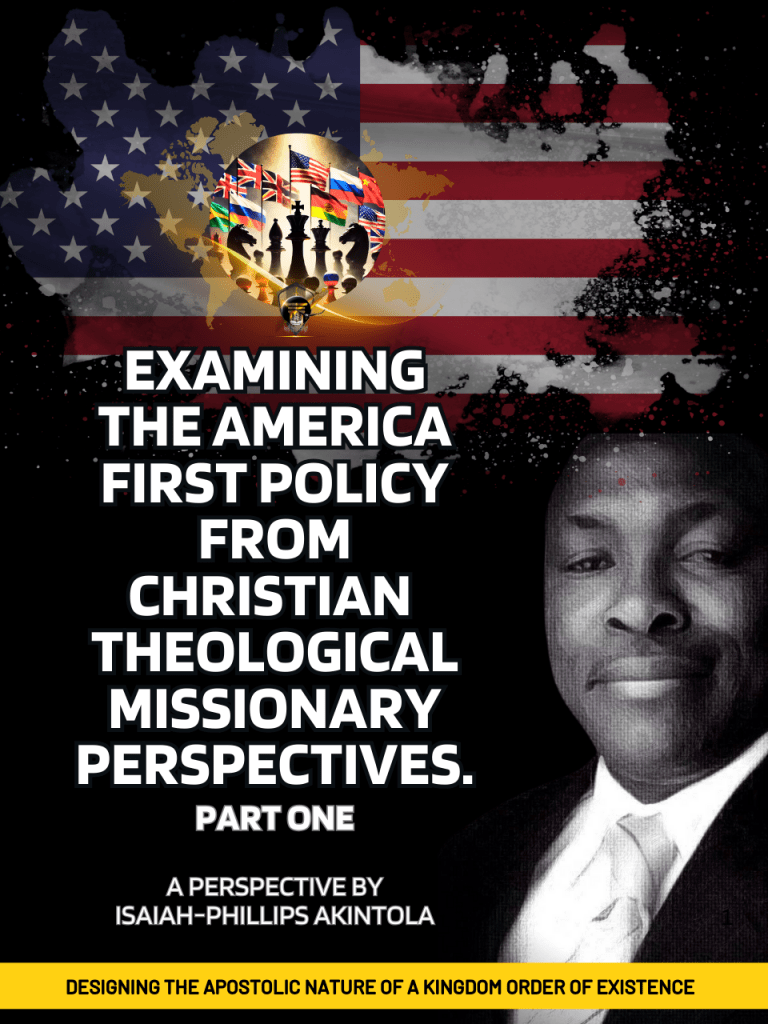
BY ISAIAH-PHILLIPS AKINTOLA
Introduction:
This article explores the intersection of the “America First” policy and the Christian missionary mandate, examining how this policy might advance or limit the values that America, as a Christian nation, stands for. Rather than promoting a specific political agenda, this discussion seeks to provide a balanced biblical perspective on how the “America First” policy under President Donald Trump’s leadership might impact global Christian mission and values.
In this context, the article will delve into the implications of this policy on Christian values, international relations, and the spread of Christianity, offering insights into the complex relationships between politics, faith, and global engagement.
The intersection of America First policies and Christian global mission presents real tensions but also opportunities for clarified identity and renewed commitment. By grounding responses in Scripture rather than partisan positions, Christians can navigate this landscape in ways that honor both civic responsibilities and kingdom priorities.
The church has weathered many political and policy shifts across centuries and continents. Each era presents its unique challenges to faithful witness, yet the fundamental calling remains unchanged: to love God, love neighbour, and make disciples of all nations. In this current moment, American Christians have the opportunity to demonstrate that their primary allegiance transcends national interest—not by abandoning legitimate citizenship responsibilities, but by fulfilling them within the larger context of kingdom citizenship.
As we navigate these complex issues, may we do so with humility, wisdom, and unwavering commitment to the One who calls us to care for both our national communities and the ends of the earth. For ultimately, every nation—including America—exists within God’s larger redemptive purposes for all creation.
The Intersection of Policy and Faith
The implementation of America First policies under the Trump administration has prompted necessary reflection among Christian communities about the relationship between national priorities and global gospel outreach.
As Christians committed to the Great Commission—Christ’s mandate to “go and make disciples of all nations” (Matthew 28:19-20)—we find ourselves navigating the complex interplay between citizenship in an earthly nation and our primary identity in the Kingdom of God.
This series examines the impacts, tensions, and opportunities created by America First policies for Christians engaged in global mission work. As I’ve just said, this article seeks not to advocate for some particular political positions, but rather to provide a framework for faithful discernment as believers seek to honor both their responsibilities as citizens and their calling as ambassadors of Christ to all peoples.
Part 1
The Historical Context of American Foreign Policy and Christian Missions
For generations, American foreign policy and Christian missionary efforts have shared a complex, sometimes cooperative and sometimes contentious relationship. From the early republic through the Cold War era, American missionaries often traveled alongside—or ahead of—American diplomatic and economic interests. This created a sometimes-beneficial partnership where humanitarian and religious work received protection and support from American influence abroad.
During the post-World War II era especially, American churches expanded global outreach efforts significantly, often with tacit support from government policies that viewed religious freedom advocacy and humanitarian work as complementary to American strategic interests. The extensive network of American mission hospitals, schools, relief organizations, and churches that developed during this period reflected both genuine Christian commitment to global service and the relative ease with which American citizens and resources could move across borders.
Key Shifts Under America First
The America First approach represents a notable recalibration of American priorities, with several key principles that affect the landscape in which global Christian missions operate:
- Prioritization of domestic needs over international commitments, reducing foreign aid, reassessing international agreements, and focusing resources on American concerns first
- Transactional approach to foreign relations, evaluating international partnerships primarily through the lens of direct benefit to American interests
- Increased scrutiny of immigration and border security, tightening restrictions on who can enter the United States and under what circumstances
- Reevaluation of multilateral engagements, showing greater skepticism toward international organizations and agreements
These policy shifts have created both practical and philosophical challenges for Christian mission work, which has historically relied on relatively open borders, robust international cooperation, and a conception of American identity that included global moral leadership and responsibility.
Immediate Impacts on Christian Global Mission
For churches and ministries engaged in international outreach, the practical effects of America First policies have been significant:
- Logistical complications: The visa process for religious workers entering and leaving the United States has become more complex and uncertain, affecting everything from missionary deployments to international Christian conferences.
- Resource constraints: Reductions in certain categories of foreign assistance have eliminated partnership opportunities that once multiplied the impact of church-based humanitarian efforts.
- Security concerns: In regions where diplomatic tensions have increased, American missionaries sometimes face heightened suspicion from local authorities or communities who may associate them with controversial policy positions.
- Organizational adaptations: Mission agencies have needed to restructure approaches, sometimes accelerating the transition to locally-led operations not dependent on American personnel.
While these challenges have disrupted established patterns of global mission work, they have also prompted important conversations about sustainability, equity, and the proper relationship between Christian outreach and national interests—conversations that many mission leaders acknowledge were overdue.
 PortalsGate
Leave a comment