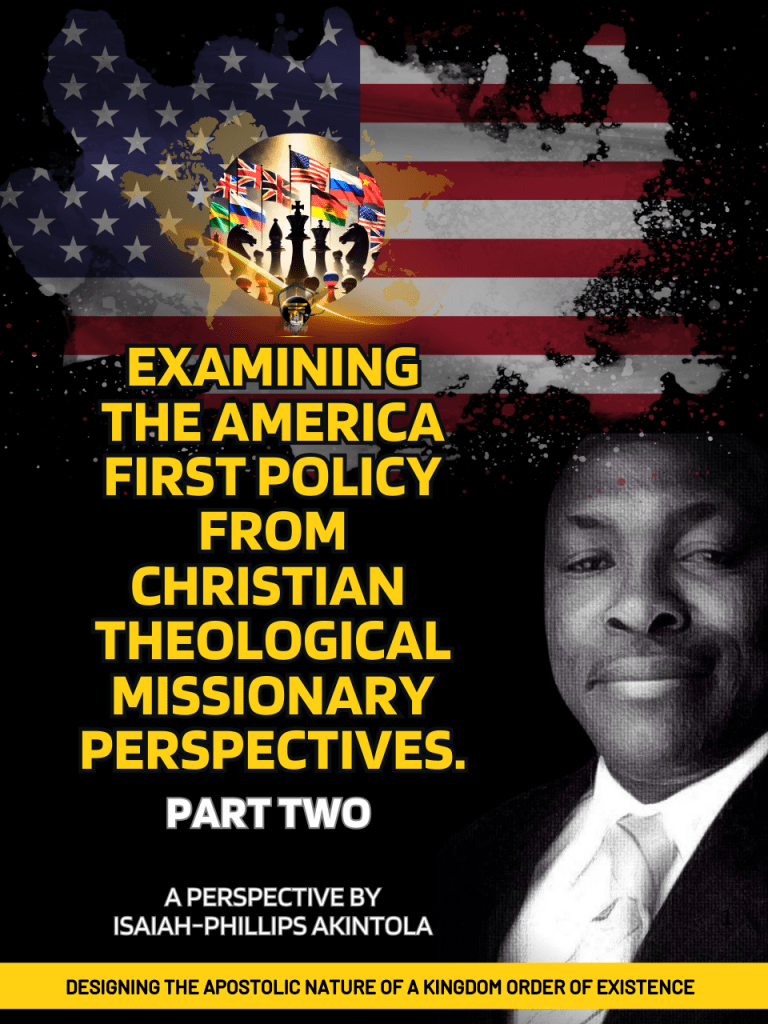
BY ISAIAH-PHILLIPS AKINTOLA
Part II:
The intersection of faith and politics requires thoughtful discernment, particularly in our current political climate. As believers tasked with discipling nations, we must consider how national policies align with our kingdom mandate while maintaining a biblical foundation.
The tendency to elevate political figures to prophetic status as has happened with some Christians regarding Donald Trump’s administration often stems from an incomplete theological understanding of God’s eschatological plan. This perspective sometimes portrays certain leaders as divinely appointed defenders against perceived threats to Christianity.
Sound biblical interpretation requires us to look beyond political affiliations and personal biases. Prophecy’s role in understanding political directions and national policies demands we separate God’s agenda from partisan interests. Our primary allegiance must be to God’s kingdom rather than political movements or figures.
As citizens of heaven living as earthly citizens, we need a robust theological framework that helps us evaluate political developments through a biblical lens. This means distinguishing between genuine biblical principles and political positions that may co-opt religious language for other purposes. True Christian mission transcends political alignments while engaging thoughtfully with the realities of our time, always prioritizing God’s redemptive work in the world over temporary political victories or defeats.
The Challenge of Dual Citizenship in the Last Days
One of the defining challenges that will characterize the rule of the Antichrist in the last days—and that will cause many Christians to compromise is the inability to properly distinguish between their spiritual Kingdom citizenship and their national citizenship. This confusion is likely to become increasingly pronounced as end-time events unfold.
Our capacity to maintain authentic Christian identity while properly submitting to governmental authority will be critical to our spiritual advancement. Scripture calls believers to honor earthly authorities (Romans 13:1-7), yet this submission must always be subordinate to our ultimate allegiance to God’s kingdom and its values.
The tension between these dual citizenships will test believers’ discernment and commitment. Those who cannot separate these distinct identities risk compromising essential faith principles when national values conflict with Kingdom mandates. Conversely, those who maintain clarity about their primary citizenship in God’s Kingdom will be equipped to navigate these challenges while remaining faithful witnesses.
This understanding provides believers with a framework for engagement that neither withdraws from civic responsibility nor compromises gospel truth, a balanced approach that will become increasingly vital as we advance in the things of God during these challenging times.
The Principle of Dual Citizenship of Believers
Scripture presents believers as simultaneously citizens of earthly kingdoms and citizens of God’s Kingdom. The apostle Paul, for instance, navigated his status as both a Roman citizen and an ambassador of Christ, sometimes invoking his Roman rights (Acts 22:25-29) while maintaining ultimate allegiance to a higher kingdom (Philippians 3:20).
This dual citizenship creates both opportunities and tensions. Christians are called to honor governing authorities (Romans 13:1-7) and pray for those in leadership (1 Timothy 2:1-4), while also recognizing that when earthly and divine imperatives conflict, “we must obey God rather than human beings” (Acts 5:29).
In the context of America First policies, this means thoughtfully discerning how to fulfill both civic responsibilities to their nation and spiritual obligations to the global body of Christ. Neither uncritical nationalism nor dismissive anti-patriotism fully captures the nuanced biblical position, and this should be clearly understood and appreciated. Scripture contains themes that both affirm legitimate care for one’s own nation and mandate concern for all peoples:
- Affirmation of national identity: The Bible acknowledges distinct nations as part of God’s ordering of human society (Acts 17:26), with Israelites in particular called to faithful citizenship within their national covenant.
- Care for immediate community: Biblical wisdom includes principles of caring first for one’s household and immediate community (1 Timothy 5:8, Galatians 6:10).
- Universal gospel mandate: Christ’s final commission transcends national boundaries, calling disciples to reach “all nations” (Matthew 28:19) and be witnesses “to the ends of the earth” (Acts 1:8).
- Supernatural unity: In Christ, the dividing walls between peoples are broken down (Ephesians 2:14), creating a new community where “there is no Gentile or Jew” (Colossians 3:11).
These biblical themes suggest a balanced approach—neither dismissing legitimate national concerns nor allowing them to overshadow the universal scope of God’s redemptive work.
Let’s look Into The Question of Primary Identity
Perhaps the most fundamental question for Christians navigating America First policies is one of primary identity. Scripture consistently emphasizes that for believers, citizenship in God’s Kingdom supersedes all other affiliations. As Peter writes, Christians are “foreigners and exiles” (1 Peter 2:11) whose true citizenship is in heaven.
This perspective doesn’t negate love of country or responsible citizenship, but it does establish clear priorities. When national policies align with kingdom values, Christians can enthusiastically support them. When they conflict, primary allegiance must remain with Christ and His global ecclesia.
To be Continued!
 PortalsGate
Leave a comment