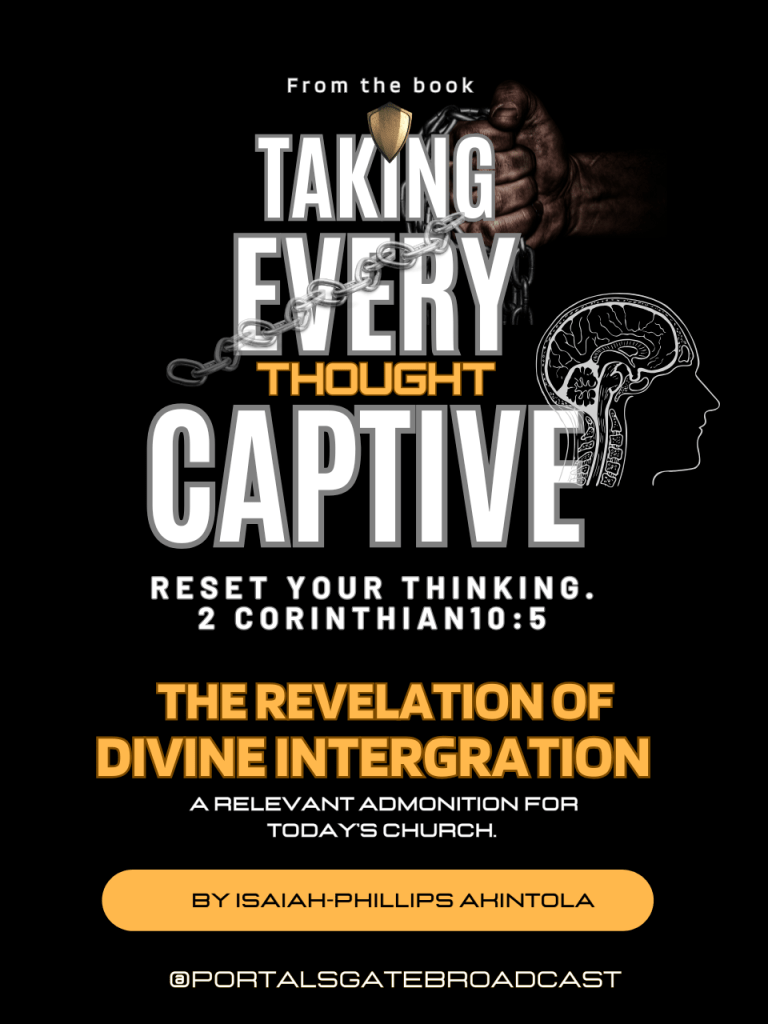
A Relevant Admonition for Today’s Church.
Brother Paul, In the Book of Ephesians 4:17 encourages the Brethren, So I tell you this, and insist on it in the Lord, that you must no longer walk as the Gentiles do, in the futility of their thinking. 18 They are darkened in their understanding and alienated from the life of God because of the ignorance in them due to the hardness of their hearts. When we delve into what distinguishes a true redeemed follower of Christ from those who simply profess faith, we are led to a profound truth that the Apostle Paul shares in Ephesians 4:17.
At the heart of this distinction lies not merely our actions or religious practices, but something much more fundamental that directly influences our way of thinking. Paul directly addresses this principle by urging believers to escape the mindset of the Gentiles.
One keyway Paul differentiates Gentiles from followers of Christ is through their mindset. He describes the lifestyle of the Gentiles as marked by the futility of their thoughts. Those lacking the life of Christ live under a mindset that is not only self-serving, but also driven by self-worship and idolatry.
The call to avoid living like the unbelieving Gentiles involves more than just a shift toward positive thinking. It requires a complete transformation of one’s experience, a thorough renovation, and transformation of how they perceive and interpret spiritual realities, and how they manifest those truths.
According to this scripture, Paul’s counsel offers profound insight into the concept of spiritual integration. This means God’s intentions are not only for the Church of Ephesus, but also for every believer to be healed and restored spirit, soul, and body. The Lord’s ultimate aim is to function within a system that enables every aspect of human life to operate in divine harmony, allowing the full realization of man’s potential and authority in fulfilling its earthly prophetic purpose.
The core concept of divine integration starts with recognizing that the human mind is the main connection between spiritual reality and human experience. Paul’s message to the Ephesian church was not simply advice for better thinking; it was a profound insight into how spiritual life functions within our human context. The apostle pointed out a significant difference between the thought processes of non-believers marked by futility, a lack of understanding, and a separation from God’s life and the transformed thinking that defines genuine Christian experience.
This disconnection from divine life, as Paul clarifies, is not due to God’s reluctance to engage with humanity, but rather to a fundamental mismatch between unregenerate thought patterns and divine truth. The human mind, when operating in its unregulated state, resembles an outdated operating system trying to run advanced modern software. This inevitably leads to system failure, which is evident in spiritual disconnection and dysfunction.
The concept of divine integration offers an insightful revolutionary perspective on how God intended human beings to operate. In contrast to fragmented approaches to spirituality that seek to isolate spiritual life experience from everyday endeavors. Divine integration suggests a comprehensive system where spirit, soul, and body work together in perfect balance.
This balance is achieved by transforming thought patterns, which act as the essential link between spiritual reality and human experience. The journey begins in the spiritual realm, where divine life originates and is transmitted through the renewed mindset into the physical realm.
When our thought patterns remain unrenewed and unchanged, as Paul describes the mindset of the Gentiles as in Ephesus as “futility”.” This creates a barrier that hinders the smooth flow of divine life. This illustration is similar to having access to pure, clear water, but directing it through dirty pipes—no matter how pure the source may be, the water will always be contaminated and unfit for consumption.
The importance of this understanding is immense.
Many believers face a disconnect between their spiritual goals and their actual experiences. They genuinely wish to embody the life of God but often feel thwarted by thought patterns that impede their spiritual growth. The answer lies not in increased religious activity, but in a fundamental transformation of these thought processes.
This transformation takes place through what Scripture refers to as the “renewing of the mind.” It’s a journey that goes beyond merely gaining biblical knowledge or embracing religious beliefs. It requires a total reorientation in how one perceives reality. A renewed mind acts as the conduit through which the creative divine life flows, turning abstract spiritual truths into tangible human experiences and innovation.
The beauty of divine integration lies in its all-encompassing nature. When a transformed thought patterns resonate with divine reality, every facet of human existence can become a channel for expressing God’s life. Emotional reactions align effortlessly with spiritual truths, and physical actions authentically reflect divine nature. The artificial divide between “spiritual” and “natural” life fades away, giving rise to a seamless flow of divine life throughout every aspect of human existence.
Nevertheless, this integration encounters a significant hurdle that Paul describes as “the hardness of the heart.” This state signifies more than simple stubbornness; it denotes a hardened consciousness that actively resists transformation. A hardened heart perpetuates a self-reinforcing cycle of spiritual ignorance, unproductive thinking, and separation from divine life. Breaking free from this cycle requires more than surface-level changes in behavior or beliefs; it calls for a profound restructuring of thought patterns.
 PortalsGate
Leave a comment